
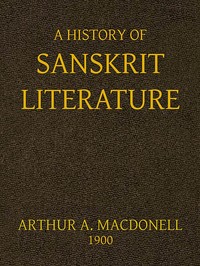
A History of Sanskrit Literature by Arthur Anthony Macdonell
Let's be clear from the start: this isn't a novel. There's no single plot. Instead, Arthur Anthony Macdonell gives us a grand tour of a massive literary universe. He starts at the very beginning, with the sacred hymns of the Vedas, which are some of the oldest words we have from India. From there, he walks us through everything that came next.
The Story
Think of it as following the life story of a language. The book shows how Sanskrit grew from religious chants into a tool for epic poetry, like the Ramayana and Mahabharata. It then blossoms into sophisticated drama, witty fables (think the Panchatantra, which influenced Aesop), precise scientific manuals, and complex philosophical debates. Macdonell doesn't just name the famous works; he explains what makes them special, who likely wrote them, and why they mattered to the people of their time. He maps out the whole landscape, from the solemn rituals of priests to the playful love poems of courtiers.
Why You Should Read It
What makes this old book still worth reading is Macdonell's genuine enthusiasm. He's not a dry lecturer. You can feel his respect for the material. He breaks down intimidating concepts—like how Sanskrit grammar itself became a science—into ideas you can actually grasp. For me, the best parts were seeing the connections. He points out how the ancient Indian playwright Kalidasa has the dramatic flair of Shakespeare, or how the logical debates in philosophy feel surprisingly modern. It makes this distant world feel familiar and its achievements even more impressive.
Final Verdict
This is the perfect book for a curious reader who wants to go deeper than a Wikipedia summary. It's for anyone interested in world literature, the history of ideas, or the foundations of Indian culture. If you've enjoyed myths, epics, or philosophy from other traditions, this book shows you one of the major sources. It's not a light read, but it's a rewarding one. Macdonell is a knowledgeable and surprisingly clear guide to a literature that is vast, ancient, and incredibly alive in its influence.
This book is widely considered to be in the public domain. Thank you for supporting open literature.
Charles Torres
1 year agoI started reading out of curiosity and the atmosphere created is totally immersive. This story will stay with me.
Margaret Wright
11 months agoIf you enjoy this genre, the pacing is just right, keeping you engaged. I couldn't put it down.
Emma Davis
7 months agoSurprisingly enough, the content flows smoothly from one chapter to the next. I couldn't put it down.
Ashley Williams
1 year agoSolid story.

Amanda Wilson
2 years agoThe layout is very easy on the eyes.