
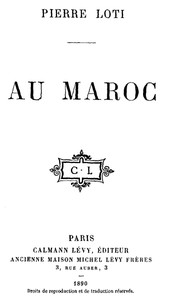
Au Maroc by Pierre Loti
Pierre Loti's Au Maroc is a travel diary from a pivotal moment. In 1889, he accompanied a French envoy to the court of Sultan Hassan I. The mission's official purpose was diplomacy, but the unspoken reality hung in the air: the Sultan was gravely ill, and his death could plunge the nation into crisis.
The Story
There isn't a traditional plot. Instead, Loti takes us along as a deeply observant tourist. We travel with him from the coast to the imperial city of Fez. He describes everything – the stark beauty of the landscape, the overwhelming grandeur of the Sultan's palace, the vibrant chaos of the souks, and the quiet dignity of the people. The real 'story' is the palpable tension. Every lavish reception, every silent glance, is shadowed by the question of what comes next. Loti is an outsider looking in, fascinated by the rituals and beauty, but always aware of the political tremors beneath the surface. The book ends not with a resolution, but as the mission departs, leaving Morocco in its uncertain wait.
Why You Should Read It
I love this book for its mood. Loti is a master of atmosphere. His writing isn't just about seeing Morocco; it's about feeling it. You feel the dry heat, smell the spices and the animals, and sense the watchful eyes in the crowded streets. He's honest about his position as a European visitor – sometimes enchanted, sometimes confused, never fully comprehending the world he's entered. This honesty makes his vivid descriptions feel earned. He doesn't claim to have all the answers. He's just a brilliant note-taker for a world on the cusp of change.
Final Verdict
This book is perfect for readers who love immersive travel writing and historical atmosphere over action. If you enjoyed the sensory journeys in books like Patrick Leigh Fermor's or the reflective tone of some of Jan Morris's work, you'll find a friend in Loti. It's also a fascinating, ground-level glimpse for anyone interested in North African history or colonial-era encounters. Just don't expect a thriller. Think of it as a beautifully written, melancholic postcard from a lost moment in time.
You are viewing a work that belongs to the global public domain. Share knowledge freely with the world.
Patricia Smith
1 year agoAfter spending a few days with this digital edition, the author doesn't just scratch the surface but goes into meaningful detail. Simple, effective, and authoritative – what else could you ask for?
Charles Thompson
1 month agoThe layout is perfect for tablet and e-reader devices.
Emily Jackson
1 year agoVery satisfied with the depth of this material.
Jessica Brown
8 months agoI decided to give this a try based on a colleague's recommendation, the author doesn't just scratch the surface but goes into meaningful detail. This adds significant depth to my understanding of the field.


William White
7 months agoThis work demonstrates a clear mastery of contemporary theories.