
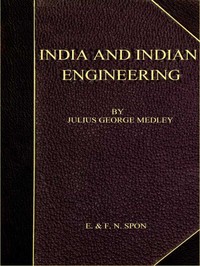
India and Indian Engineering. by J. G. Medley
Published in 1873, 'India and Indian Engineering' is the first-hand account of Julius George Medley, a British engineer who spent decades working on major infrastructure projects across India. The book is part memoir, part technical guide, and part cultural observation. Medley walks us through the monumental task of constructing railways, irrigation canals, and roads in a land with a climate and geography utterly foreign to European engineers.
The Story
There isn't a traditional plot with characters, but there is a clear narrative: the story of imposing a new technological order on an ancient land. Medley details the specific challenges his teams faced. How do you build a railroad bridge that can withstand monsoon floods? What materials work best in the intense heat? He explains the solutions they devised, often through trial and error. The book moves from the drawing boards in Calcutta to the dusty construction sites, giving a ground-level view of the Industrial Revolution hitting India. It's the story of earth being moved, steel being laid, and a landscape being physically altered.
Why You Should Read It
What makes this book compelling is Medley's voice. He's not a distant historian; he's a practical man with mud on his boots. You get his frustration with bureaucracy, his pride in a well-built embankment, and his genuine curiosity about Indian building techniques that had worked for centuries. While the book is undeniably a product of its colonial time, reading it lets you see the birth of modern India's infrastructure from the inside. It’s less about politics and more about the sheer, gritty work of construction. You come away understanding the physical reality of 'progress' in that era.
Final Verdict
This is a perfect read for anyone interested in the history of engineering, colonial history, or the making of modern India. It's not a light novel, but it's surprisingly accessible for a 150-year-old technical book. Think of it as sitting down with a sharp, experienced engineer who has great stories about building the bones of a nation. If you enjoy primary sources that let you touch the past, Medley's book is a rewarding and unique window into a transformative period.
Emma Thompson
6 months agoThe layout is very easy on the eyes.
Kimberly Garcia
8 months agoAs someone who reads a lot, the flow of the text seems very fluid. Definitely a 5-star read.




Richard White
3 months agoHigh quality edition, very readable.