
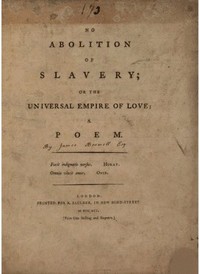
No Abolition of Slavery by James Boswell
The Story
In 1785, Britain was buzzing with debate over abolishing the slave trade. Big names like William Wilberforce had just begun their fight. Enter James Boswell—yes, the same guy who wrote the famous biography of Dr. Samuel Johnson—publishing No Abolition of Slavery. Now, don’t go thinking this is a balanced overview. Boswell takes a strong stand: he argues
the slave trade is economically essential
and abolitionists are dangerous idealists who don’t understand how
the world works. He points to the sugar plantations in the West Indies and says, “These are the backbone of Britain’s prosperity.” He warns that sudden freedom would leave both slaves and masters worse off. But here’s the fascinating bit: he also offers some unsettling arguments that his readers then would agree with—ideas about ordered society, gradual change, and respect for property rights. So yeah, it’s not a rebellion or a mystery plot; it’s an intellectual fight from the other side of history. The real story is in watching a good writer try to defend the indefensible using his best persuasive tools. Heavy stuff.
Why You Should Read It
It’d be easy to hate this book, but that’s the whole point. What struck me most is how Boswell really believed he was on the right side. Reading him, you see how morality can get twisted by self-interest and national pride. It’s like a painful mirror: we all think we’d be the abolitionists if we lived back then, but these pamphlets show how even good people then locked arms with injustice. Why would you put yourself through this? Because it exposes the guts of historical change. You feel the anger of the pro-slavery side, and that makes you understand why abolishing it took so much guts and time. It’s also a treasure for anyone fascinated by language—Boswell controls his tone pretty well, making his wrong-headed case seem completely rational for a paragraph or two. That’s the unsettling power of good writing in the hands of bad politics. It makes for explosive discussion in a book club or a history buff’s inner circle.
Final Verdict
This book is definitely not for everyone—especially readers who just want a feel-good story of moral progress. But if you like to get down into the muddy weeds of moral disagreement, this is your jam. Perfect for serious history buffs, students of political philosophy, and anyone writing counterarguments in college who needs an example from the deepest end of the pool. Also a great book to argue about with others over a strong cup of coffee. Not recommended before bed unless you want some uncomfortable dreams. If you’re brave, read it alongside an abolitionist pamphlet and watch your brain explode.
This masterpiece is free from copyright limitations. You do not need permission to reproduce this work.
Emily Davis
2 years agoAfter spending a few days with this digital edition, the visual layout and supporting data make the reading experience very smooth. A mandatory read for anyone in this industry.
Jessica Williams
2 years agoAs a long-time follower of this subject matter, the formatting on mobile devices is surprisingly crisp and clear. A solid investment for anyone's personal development.
Jennifer Smith
9 months agoI particularly value the technical accuracy maintained throughout.
William Jackson
5 months agoGiven the current trends in this field, the evidence-based approach makes it a very credible source of information. This is a solid reference for both beginners and experts.




Ashley Williams
5 months agoThis is now a staple reference in my professional collection.