About 317 minutes
The Land of the Long Night — Inside the Classic
Exploration
72,717 recorded words. 23 minutes difference from this book's estimate.
View Gutenberg source #22727
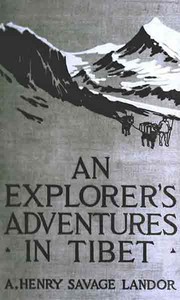
Before opening An Explorer's Adventures in Tibet — Edition Insights, the edition data offers a quick orientation: 78,123 words, 5 hr 40 min estimated reading time, and 9 detected text sections.
The text analysis averages about 17.4 words per sentence, while the detected sections provide another way to judge how the source is divided.
Project Gutenberg metadata also associates the work with “Tibet Autonomous Region (China) -- Description and travel,” connecting these edition facts with the source record’s subject description.
Explore this collection
These alternatives are selected using recorded categories and estimated reading time.
About 317 minutes
Exploration
72,717 recorded words. 23 minutes difference from this book's estimate.
View Gutenberg source #22727About 313 minutes
Exploration
71,889 recorded words. 27 minutes difference from this book's estimate.
View Gutenberg source #15245About 397 minutes
Exploration
91,291 recorded words. 57 minutes difference from this book's estimate.
View Gutenberg source #17164Search stored excerpts and compare books → Choose by your preferences →
Choices use stored catalog measurements. Estimates vary with reading speed. A shared category is a catalog label, not a claim that two books have the same argument or literary quality.
Search reads excerpt text stored with this catalog and links to its associated Gutenberg record. The connection is stored in the site database; this tool does not recheck that every excerpt is word-for-word identical to that external record. Excerpt search does not cover every chapter and does not verify historical publication dates.
Catalog snapshot checked: 2026-09-26. Coverage: 97 public books, 97 available source excerpts.
Calculated from edition completeness, EPUB availability, text structure and catalogue metadata. Not a user rating.
Total of 100 points, scaled to a 2.5-5.0 range. Editions with an empty description or a missing EPUB file are not scored.
Public-domain source text
The source text is kept in the dedicated reader, separate from this catalogue record and its commentary.
Arnold Henry Savage Landor's An Explorer's Adventures in Tibet opens with a preface that carefully separates adventure from science, directing readers to his larger work In the Forbidden Land for detailed ethnographic and geographical data. Yet the narrative itself repeatedly collapses that distinction: the author's diary entries, surveying routines, and photographic plate changes are woven into the same paragraphs as yak attacks and flight from soldiers. This editorial note examines how Landor's language, narrative voice, and shifts in pace create a distinctive hybrid of exploration report and survival memoir.
Landor's first-person narration oscillates between two registers. In one, he is the methodical explorer: he records "registering of observations, sketching, photographing, changing plates in cameras, occasionally developing negatives, surveying, cleaning rifles, revolver, etc." as a routine list. In the other, he becomes the fugitive: "I remained lying flat on the top of the hill, spying with my telescope the movements of our pursuers." The same telescope that serves science becomes a tool for evasion. His prose rarely lingers on emotion; instead, it conveys urgency through short, declarative sentences and concrete details—"the tinkling of their horse-bells sounding pleasant to the ear in that deserted spot"—that momentarily slow the pace before the next crisis.
The excerpt reveals a recurring structural pattern: a methodical task is interrupted by sudden violence, then followed by a compressed retreat. Landor describes the labor of loading yaks with "heavy tin-lined cases of scientific instruments" in careful, almost procedural language. The yak's horn strike—"a terrific blow ... sent me rolling head over heels"—arrives without warning, and the narrative immediately accelerates into pursuit. This rhythm of preparation, shock, and flight governs the pacing. The author's diary-like entries, with their precise elevations ("17,000 feet") and weather notes ("rain began to fall heavily again"), anchor the reader in a specific, harsh geography even as the action quickens.
Landor's word choices often underplay the extraordinary. When his two remaining servants refuse to abandon him, their dialogue is rendered plainly: "Sir, we are not Shokas. If you die, we will die with you." The author does not embellish their loyalty with adjectives; he lets the contrast with the twenty-eight deserters speak. Similarly, physical hardship is described through inventory: stolen rope, missing straps, the effort to "make the final knot." The narrative voice remains matter-of-fact even when recounting a blow to the skull. This restraint gives the account a documentary quality, but the accumulation of precise, tangible losses—provisions, equipment, men—creates a mounting sense of isolation that needs no rhetorical emphasis.
Readers approaching this work should attend to the interplay between Landor's scientific cataloguing and his survival narrative. The pace shifts are not accidental; they mirror the unpredictability of travel in a region closed to foreigners. The author's voice, though consistently first-person, modulates between the detached observer and the imperilled participant. Noticing when and why these shifts occur—often at moments of equipment failure or physical threat—reveals how Landor constructs authority as both a geographer and a witness to extremity.
What stayed with me wasn’t just Landor’s map-like precision in Tibet, but the sudden rawness when the body fails—limping, bleeding, alone. That quiet rupture between calm record and desperate pulse felt like a secret. The Land of the Long Night — Inside the Classic carries a similar buried ache, a frozen wilderness where the voice cracks under its own weight. I keep thinking about that.
Build a private reading journal entry for this title.