About 67 minutes
A Journey in Russia in 1858 — Key Ideas to Explore
Geography
15,408 recorded words. 2 minutes difference from this book's estimate.
View Gutenberg source #27366
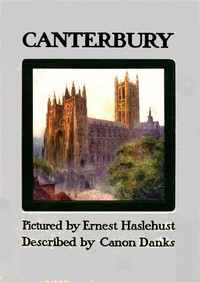
The source record for Canterbury — Story, Setting & Ideas measures this digital text at 14,920 words, 1 hr 5 min estimated reading time, and 2 detected text sections.
The text analysis averages about 25.7 words per sentence, while the detected sections provide another way to judge how the source is divided.
Project Gutenberg metadata also associates the work with “Canterbury (England) -- Description and travel,” connecting these edition facts with the source record’s subject description.
Explore this collection
These alternatives are selected using recorded categories and estimated reading time.
About 67 minutes
Geography
15,408 recorded words. 2 minutes difference from this book's estimate.
View Gutenberg source #27366About 69 minutes
Geography
15,799 recorded words. 4 minutes difference from this book's estimate.
View Gutenberg source #24551About 58 minutes
Geography
13,227 recorded words. 7 minutes difference from this book's estimate.
View Gutenberg source #32539Search stored excerpts and compare books → Choose by your preferences →
Choices use stored catalog measurements. Estimates vary with reading speed. A shared category is a catalog label, not a claim that two books have the same argument or literary quality.
Search reads excerpt text stored with this catalog and links to its associated Gutenberg record. The connection is stored in the site database; this tool does not recheck that every excerpt is word-for-word identical to that external record. Excerpt search does not cover every chapter and does not verify historical publication dates.
Catalog snapshot checked: 2026-09-26. Coverage: 97 public books, 97 available source excerpts.
Calculated from edition completeness, EPUB availability, text structure and catalogue metadata. Not a user rating.
Total of 100 points, scaled to a 2.5-5.0 range. Editions with an empty description or a missing EPUB file are not scored.
Public-domain source text
The source text is kept in the dedicated reader, separate from this catalogue record and its commentary.
Canon Danks opens his essay on Canterbury by explicitly declining to write a guidebook or a history, offering instead what he calls a 'keepsake or memorial' for the annual pilgrims. This framing shapes the prose: it moves freely between Roman roads, Saxon churches, and the medieval cult of Thomas Becket, held together by the author's own associative memory rather than a strict itinerary. Danks's voice is that of an informed companion, pointing out the Dane John earthwork, the Roman bricks reused in St. Martin's, and the worn steps in the cathedral—details that reward a reader attentive to physical traces of the past.
Danks presents Canterbury as a palimpsest of occupations. He notes the Dane John as a 'variant of Donjon or stronghold' and describes the city wall where 'the soldiers of the Middle Ages faced and fortified the British earthwork.' Roman cemeteries yielded 'bracelets, pins, mirrors, horse-bits, coins, even rouge-pots,' and the roads from Richborough, Dover, and Lympne converge on streets still named Burgate, Watling Street, and Wincheap. The Saxon period is embodied by Queen Bertha and King Ethelbert, with Augustine's arrival marked by a 'silver cross and painted Christ.' Danks's method is to let material remains—a brick, a rampart, a street name—carry the narrative forward.
In the crypt, Danks describes two recent discoveries: a well that 'probably supplied the water for the ampulles or leaden bottles of the pilgrims,' and a stone chest containing bones 'certainly those of a tall man' with 'the mark of violence on the skull.' He reports the argument of Dr. Moore that the bones may be Becket's, hidden to avoid violation, but he does not assert certainty. The slab 'bears no inscription' but 'will be readily pointed out by a guide.' Danks then recalls Henry II's penance in 1174, when the king 'laid his head on the tomb of Becket between those two slender pillars' and was scourged. The author leaves the question of motive—'penitence' or 'policy'—open.
Danks reconstructs the vanished shrine from textual and architectural clues. It stood in the Trinity Chapel on a platform with three steps, the lowest 'worn by pilgrims' knees.' Three arches supported the coffin; through one, suppliants passed to 'derive some virtue from the relics.' A monk called the Mystagogus—'as Erasmus, with a touch of mockery, calls him'—drew up an oaken cover to reveal 'all the splendour of gold and gems.' Within thirty years of Erasmus's visit, 'every vestige of this magnificence was swept away,' and only a single small panel of stained glass survives. Danks's account is careful to distinguish what is known from what is inferred.
Danks notes that the chantry in the crypt, built by a prior and a mason, is now the Chapel of the French Protestants, who have held services there since 1575. After the Revocation of the Edict of Nantes in 1685, refugees 'are said to have numbered three thousand' and brought 'a large trade in silk-weaving and paper-making.' Their descendants 'are now merged into the English population, but their names and the weekly French service still survive.' This observation ties the cathedral's fabric to a later wave of migration, showing how Danks reads the city's history through both architecture and ongoing practice.
Danks's essay rewards a reader who attends to the specific: the worn step, the reused brick, the uninscribed slab. He does not claim to have written a complete history, and his text is best approached as a series of connected observations rather than a systematic account. The illustrations by E. W. Haslehust, listed in the front matter, complement the prose by offering visual counterparts to the sites described. For those interested in how a place accumulates meaning through physical layers, this short work provides a focused, personal record.
Reading about Canterbury’s layered streets, I remembered standing in a sun-baked Italian piazza, feeling the same quiet weight of centuries pressing through cobblestones and facades. That sensation returns whenever I page through Fair Italy, the Riviera and Monte Carlo Comprising a Tour Through North and South Italy and Sicily with a Short Account of Malta — Text and Context. Both books let me wander slowly, tracing old stones as if hearing faint footsteps beneath my own.
Build a private reading journal entry for this title.









