
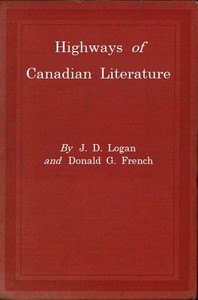
Highways of Canadian Literature by J. D. Logan and Donald G. French
Let's be clear from the start: this isn't a storybook. Highways of Canadian Literature is a literary guidebook, published in 1924. Think of it as a snapshot—a passionate, sometimes argumentative attempt by two academics, J.D. Logan and Donald G. French, to map out all the important writing Canada had produced up to that point. They're trying to build a canon, to say 'this work matters' and 'this writer deserves to be remembered.'
The Story
There's no plot in the traditional sense. The 'story' is the journey of Canadian literature itself, as Logan and French tell it. They start way back with early explorers' journals and First Nations oratory, then travel through the 19th century, stopping to examine poets, novelists, and historians. They group writers by region and style, praising some (like Bliss Carman and Charles G.D. Roberts) and giving others a more critical look. The book's structure is their roadmap, and each chapter is a different 'highway' leading you to a new group of authors and ideas. The tension comes from their mission—defining something that was still very young and actively being shaped.
Why You Should Read It
You read this for the perspective, not the plot. It's fascinating to see what these scholars valued a hundred years ago. Their choices and comments reveal the tastes and blind spots of their time. When they argue about whether an immigrant writer can be 'truly' Canadian, you see the roots of conversations we're still having today. It’s not a dry list; their voices come through. You can feel them trying to build a national identity through books. For a modern reader, it's less about agreeing with their rankings and more about understanding where our literary conversation began. It makes you question: who are we leaving out of today's version of this book?
Final Verdict
This is a niche read, but a rewarding one. It's perfect for history buffs, Canadian literature students, or anyone curious about how a country's culture gets built, one book review at a time. It's not a page-turner, but a thought-provoker. You won't race through it, but you'll find yourself constantly looking up the writers they mention and comparing their 1924 take to what we think now. If you've ever enjoyed a book by Margaret Atwood, Alice Munro, or Michael Ondaatje, this is the strange, foundational text that tried to pave the way for them, long before they were even born.
Legal analysis indicates this work is in the public domain. It is available for public use and education.
Karen White
5 months agoOne of the most comprehensive guides I've read this year.
Elizabeth Lee
4 months agoWow.
Andrew Martinez
4 months agoThis book was worth my time since it provides a comprehensive overview perfect for everyone. Truly inspiring.
Lucas Lewis
1 year agoHonestly, the pacing is just right, keeping you engaged. Truly inspiring.



Matthew Brown
1 year agoThe digital formatting makes it very easy to navigate.