About 138 minutes
A Winter Tour in South Africa — Key Ideas to Explore
Geography
31,612 recorded words. 7 minutes difference from this book's estimate.
View Gutenberg source #16399
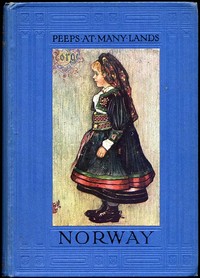
The catalog record for Peeps at Many Lands: Norway — Themes and Context provides practical reading context through 29,983 words, 2 hr 11 min estimated reading time, and 5 detected text sections.
The text analysis averages about 27.6 words per sentence, while the detected sections provide another way to judge how the source is divided.
Project Gutenberg metadata also associates the work with “Norway -- Description and travel,” connecting these edition facts with the source record’s subject description.
Explore this collection
These alternatives are selected using recorded categories and estimated reading time.
About 138 minutes
Geography
31,612 recorded words. 7 minutes difference from this book's estimate.
View Gutenberg source #16399About 138 minutes
Geography
31,641 recorded words. 7 minutes difference from this book's estimate.
View Gutenberg source #27749About 120 minutes
Geography
27,441 recorded words. 11 minutes difference from this book's estimate.
View Gutenberg source #18647Search stored excerpts and compare books → Choose by your preferences →
Choices use stored catalog measurements. Estimates vary with reading speed. A shared category is a catalog label, not a claim that two books have the same argument or literary quality.
Search reads excerpt text stored with this catalog and links to its associated Gutenberg record. The connection is stored in the site database; this tool does not recheck that every excerpt is word-for-word identical to that external record. Excerpt search does not cover every chapter and does not verify historical publication dates.
Catalog snapshot checked: 2026-09-26. Coverage: 97 public books, 97 available source excerpts.
Calculated from edition completeness, EPUB availability, text structure and catalogue metadata. Not a user rating.
Total of 100 points, scaled to a 2.5-5.0 range. Editions with an empty description or a missing EPUB file are not scored.
Public-domain source text
The source text is kept in the dedicated reader, separate from this catalogue record and its commentary.
The book opens with a direct question—'Who has not heard of the Vikings?'—immediately establishing a tone of shared cultural knowledge. The author, a Lieutenant-Colonel and Fellow of the Royal Geographical Society, frames Norway through its Viking heritage, recounting the Battle of Stamford Bridge and King Harald Fairhair's unification campaign. This historical lens sets expectations for a narrative that blends past and present, though the excerpts suggest the book quickly moves to contemporary observations.
The first chapter, 'The Land of the Vikings,' uses the sagas as a springboard, but the table of contents reveals a swift transition: Chapter II is 'Modern Norway,' followed by chapters on industries, farming, and customs. This structure implies that Mockler-Ferryman intends to connect historical legacy to current life, a pattern visible in the excerpts. For instance, after discussing Harald Fairhair's twelve-year campaign, the narrative shifts to descriptions of contemporary Norwegian society. Readers should note how the author balances historical anecdote with ethnographic detail, often using the past to explain present practices.
A later excerpt provides a detailed account of reindeer, emphasizing their economic and cultural importance. The author corrects a popular misconception: reindeer sleighs are not common across Norway but are specific to the far north and the Laplanders. The description of driving a reindeer 'pulk' is vivid and precise—'only one trace,' 'one rein,' and the risk of capsizing. Mockler-Ferryman explains that reindeer 'tameness' is relative; they are lassoed from a distance. This section illustrates the author's method: using concrete, practical details to educate his audience, likely British readers unfamiliar with Scandinavian life.
The book includes twelve colour plates by A. Heaton Cooper and Nico Jungmann, listed in the front matter. Titles such as 'A Hardanger Bride,' 'A Sæter,' and 'Skiers Drinking Goosewine' suggest scenes of daily life and landscape. The frontispiece, 'Skjæggedalsfos, Hardanger Fjord,' and the map indicate a geographical focus. These illustrations complement the text, offering visual evidence of the people and places described. Readers should consider how the images interact with the prose—whether they reinforce the author's observations or provide independent perspectives on Norwegian culture.
Mockler-Ferryman writes as an informed outsider, addressing readers who share his British background. He assumes familiarity with Viking history ('We English should know something of them') and uses comparisons to Canadian moose or London poulterers' shops. His tone is authoritative yet accessible, mixing historical narrative with practical advice. The excerpts show a preference for explanatory passages over personal anecdote, though the reindeer-driving scene includes a second-person hypothetical ('Imagine what it would be like'). This blend of instruction and mild adventure suggests the book aims to inform and entertain a general audience.
For a first reading, pay attention to how the author moves between historical and contemporary subjects, and note the recurring emphasis on practical details—farming methods, animal behaviour, local customs. The illustrations are integral to the work's design, so consult them alongside the text. This is not a travel narrative in the modern sense but a guided tour by a knowledgeable Victorian-era writer, offering a snapshot of Norway as it was understood in 1909.
There’s something tender about how Mockler-Ferryman lets Norway reveal itself slowly, in glimpses rather than grand claims. That same unhurried trust in place lingers in Bruges and West Flanders — A Closer Reading, where the cobblestones feel as patient as the fjords. Both books ask only that you look twice, then let the quiet do its work.
Build a private reading journal entry for this title.









