About 170 minutes
A Truthful Woman in Southern California — Text and Context
Travel Narratives
39,064 recorded words. 37 minutes difference from this book's estimate.
View Gutenberg source #19391
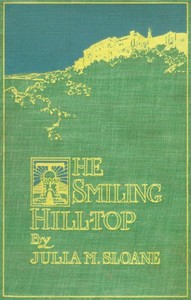
Before opening The Smiling Hill-Top, and Other California Sketches — Edition Insights, the edition data offers a quick orientation: 30,540 words, 2 hr 13 min estimated reading time, and 4 detected text sections.
The text analysis averages about 21.6 words per sentence, while the detected sections provide another way to judge how the source is divided.
Project Gutenberg metadata also associates the work with “California, Southern -- Description and travel,” connecting these edition facts with the source record’s subject description.
Explore this collection
These alternatives are selected using recorded categories and estimated reading time.
About 170 minutes
Travel Narratives
39,064 recorded words. 37 minutes difference from this book's estimate.
View Gutenberg source #19391About 198 minutes
Travel Narratives
45,474 recorded words. 65 minutes difference from this book's estimate.
View Gutenberg source #12313About 309 minutes
Travel Narratives
70,842 recorded words. 176 minutes difference from this book's estimate.
View Gutenberg source #15830Search stored excerpts and compare books → Choose by your preferences →
Choices use stored catalog measurements. Estimates vary with reading speed. A shared category is a catalog label, not a claim that two books have the same argument or literary quality.
Search reads excerpt text stored with this catalog and links to its associated Gutenberg record. The connection is stored in the site database; this tool does not recheck that every excerpt is word-for-word identical to that external record. Excerpt search does not cover every chapter and does not verify historical publication dates.
Catalog snapshot checked: 2026-09-26. Coverage: 97 public books, 97 available source excerpts.
Calculated from edition completeness, EPUB availability, text structure and catalogue metadata. Not a user rating.
Total of 100 points, scaled to a 2.5-5.0 range. Editions with an empty description or a missing EPUB file are not scored.
Public-domain source text
The source text is kept in the dedicated reader, separate from this catalogue record and its commentary.
Julia M. Sloane opens The Smiling Hill-Top with a disclaimer: her sketches are "entirely informal" and contain "no information whatever" about missions or history. What follows is a record of happenstance, told in a voice that is at once wry and confiding. The narrative moves from the family's arrival—"We came for a year and, like many another family, have taken root"—to vignettes of rattlesnakes, ground squirrels, and a dawn chase after a skunk. The prose is brisk, self-deprecating, and alert to the absurdities of domestic life in a new landscape.
Sloane’s narrative voice is the book’s most consistent feature. She warns readers to "make allowance for the bounce of the ball," and the prose lives up to that promise. Sentences tumble forward with dashes and asides, as when she describes a frog in the fountain with "a volume of sound equal to Edouard de Reske in his prime." The tone is conversational but never slack; it carries the reader through catalogues of silverware, empty bottles, and old letters. The voice is that of a woman who has "thrown my extra wraps and bundles beside the road" and finds the act exhilarating.
The sketches vary their pace abruptly. A leisurely description of gardening may give way to a sudden crisis: the head of the family in pajamas at dawn chasing a skunk with a garden hose. Sloane lingers over the absurdity of the scene—"Oh, yes, there is plenty of adventure still left"—before returning to quieter observations. Elsewhere, the tempo slows for meditations on throwing away old letters: "No one ought to have a good time reading over old letters—there's always a tinge of sadness about them." These shifts in rhythm keep the reader alert, mirroring the unpredictability of life on a California hill-top.
Certain details recur: the family’s two dogs, the two boys, the chauffeur pressed into service for odd jobs. Sloane returns again and again to the theme of shedding possessions—"I've rid myself of a lot of useless ideas"—and the pleasure of traveling light. The sketches are anchored by small, concrete objects: a cobwebby box of empty beer bottles, a frog in the fountain, a garter snake in Eden. These details ground the narrative in a specific place and time, even as the author’s tone remains light and self-mocking. The result is a portrait of a family learning to live with less, and finding freedom in the process.
Sloane treats Southern California as a living presence, not a backdrop. She notes the absence of rain from May to October, the "horrid little shaky earthquakes," and the way visitors catch colds in February when "the roses aren't in bloom." The landscape is both generous and treacherous, offering quail and rabbits alongside rattlesnakes. The author’s tone is affectionate but unsentimental; she admits that the family’s reactions may be "too highly colored" because of their sudden transplant from a rigorous climate. The hill-top itself becomes a character, a place where the family has "taken root for all our days."
Sloane’s sketches reward a patient reader. The book is best approached not as a guide to California but as a series of personal essays, each one a snapshot of a family finding its footing in a new world. Pay attention to the asides and the sudden shifts in tone—they are where the real story lives. The author’s voice, at once brisk and confiding, makes even the smallest incident worth attending to.
That book made me think of another one, American Adventures: A Second Trip 'Abroad at home' — Text and Context, because both feel like letters from someone learning to see home as wonderfully strange. The way Sloane notices a lizard or a lazy afternoon stays with you quietly, long after you put it down.
Answer a few questions and save a private reflection on this device.