About 348 minutes
A little tour in France — Edition Insights
Geography
80,027 recorded words. 10 minutes difference from this book's estimate.
View Gutenberg source #28004
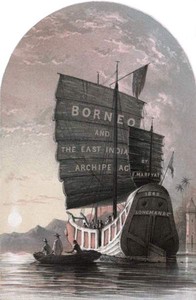
Borneo and the Indian Archipelago with drawings of costume and scenery — Reading Notes can be approached with a clearer sense of reading commitment from its source measurements: 77,542 words, 5 hr 38 min estimated reading time, and 9 detected text sections.
The text analysis averages about 25.7 words per sentence, while the detected sections provide another way to judge how the source is divided.
Project Gutenberg metadata also associates the work with “Malay Archipelago -- Description and travel,” connecting these edition facts with the source record’s subject description.
Explore this collection
These alternatives are selected using recorded categories and estimated reading time.
About 348 minutes
Geography
80,027 recorded words. 10 minutes difference from this book's estimate.
View Gutenberg source #28004About 350 minutes
Geography
80,283 recorded words. 12 minutes difference from this book's estimate.
View Gutenberg source #27881About 321 minutes
Geography
73,819 recorded words. 17 minutes difference from this book's estimate.
View Gutenberg source #23409Search stored excerpts and compare books → Choose by your preferences →
Choices use stored catalog measurements. Estimates vary with reading speed. A shared category is a catalog label, not a claim that two books have the same argument or literary quality.
Search reads excerpt text stored with this catalog and links to its associated Gutenberg record. The connection is stored in the site database; this tool does not recheck that every excerpt is word-for-word identical to that external record. Excerpt search does not cover every chapter and does not verify historical publication dates.
Catalog snapshot checked: 2026-09-26. Coverage: 97 public books, 97 available source excerpts.
Calculated from edition completeness, EPUB availability, text structure and catalogue metadata. Not a user rating.
Total of 100 points, scaled to a 2.5-5.0 range. Editions with an empty description or a missing EPUB file are not scored.
Public-domain source text
The source text is kept in the dedicated reader, separate from this catalogue record and its commentary.
Frank Marryat opens his 1848 narrative with a pointed critique of how European artists and engravers routinely misrepresent foreign lands. A hasty pencil sketch, he argues, passes through multiple hands—each stage losing the original character—until the final plate shows foliage not indigenous to the country and faces that have lost their individual features. Marryat, a midshipman on HMS Samarang, insists that no pen description equals one correct drawing. His own large collection of drawings, made during the ship's surveying cruise, forms the core of this volume; the letterpress was added only reluctantly, drawn from a private journal never intended for publication.
Marryat’s introduction is less a travelogue than a manifesto on visual accuracy. He faults the Admiralty for not supplying every survey vessel with a professional draughtsman, noting that officers’ duties are too fatiguing to allow more than hasty sketches. The result, he claims, is that many published engravings give an imperfect and even erroneous idea of what they purport to describe. He contrasts this with his own method: his drawings were made during periods when he was not doing duty on board, or while discharged into the hospital-ship at Hong Kong. The reader is thus alerted early that the text and images are meant to correct, not merely supplement, European visual conventions.
Two episodes illustrate the range of Marryat’s observations. At Ambong, a bay on Borneo’s coast, the crew found no evidence that European women had been enslaved there, despite rumors. The inhabitants were described as quiet and agricultural. In contrast, the Moros of Tampassook were notorious Illanoan pirates. When the British landed to take chronometer sights, they faced four to five hundred armed warriors. A tense parley produced a line drawn on the beach: the British would stay inside it, the pirates outside. Marryat notes the pirates’ dress—shields covering the whole body, swords with handles ornamented with human hair, and one man in a coat of buffalo leather scaled with oyster shells. The observations were completed without violence.
Throughout the excerpts, Marryat repeatedly remarks on the universal spirit of trade and barter. At Ambong, bullocks were remarkably cheap: two large animals could be bought for about twenty-five shillings’ worth of calico or other European manufactures. He speculates that if the inhabitants of Borneo were inclined to exploit their island’s riches and procure English manufactures—which, he adds, they will do once piracy is abolished—the commercial opening for Britain would be great. This economic lens is woven into the narrative alongside descriptions of scenery and costume, suggesting that Marryat’s interest in the archipelago was as much mercantile as ethnographic.
Readers should approach Borneo and the Indian Archipelago as a hybrid work: part personal journal, part illustrated survey, part commercial prospectus. Marryat’s insistence on the primacy of his drawings over his text means that the images—unfortunately not reproduced in this digital edition—were the original raison d’être. The narrative itself is episodic, shaped by the ship’s itinerary rather than by a unifying argument. Pay attention to the moments when Marryat steps back to comment on method or motive; they reveal as much about mid-nineteenth-century British attitudes as about the places he describes.
There is a quiet honesty in Frank Marryat’s Borneo sketches, the way he fusses over misdrawn costumes, that makes me think of an old diary I once found about Eight days in New-Orleans in February, 1847 — Key Ideas to Explore. Both feel less like grand reports and more like someone simply noting what their eyes truly saw, before the world tidied it up.
Answer a few questions and save a private reflection on this device.









