About 348 minutes
A little tour in France — Edition Insights
Geography
80,027 recorded words. 2 minutes difference from this book's estimate.
View Gutenberg source #28004
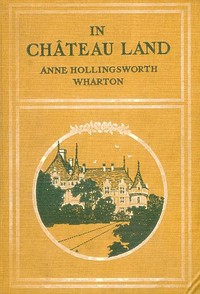
The source record for In Château Land — Edition Insights measures this digital text at 80,283 words, 5 hr 50 min estimated reading time, and 10 detected text sections.
The text analysis averages about 31.6 words per sentence, while the detected sections provide another way to judge how the source is divided.
Project Gutenberg metadata also associates the work with “Castles -- France,” connecting these edition facts with the source record’s subject description.
Explore this collection
These alternatives are selected using recorded categories and estimated reading time.
About 348 minutes
Geography
80,027 recorded words. 2 minutes difference from this book's estimate.
View Gutenberg source #28004About 359 minutes
Geography
82,367 recorded words. 9 minutes difference from this book's estimate.
View Gutenberg source #18049About 360 minutes
Geography
82,731 recorded words. 10 minutes difference from this book's estimate.
View Gutenberg source #34392Search stored excerpts and compare books → Choose by your preferences →
Choices use stored catalog measurements. Estimates vary with reading speed. A shared category is a catalog label, not a claim that two books have the same argument or literary quality.
Search reads excerpt text stored with this catalog and links to its associated Gutenberg record. The connection is stored in the site database; this tool does not recheck that every excerpt is word-for-word identical to that external record. Excerpt search does not cover every chapter and does not verify historical publication dates.
Catalog snapshot checked: 2026-09-26. Coverage: 97 public books, 97 available source excerpts.
Calculated from edition completeness, EPUB availability, text structure and catalogue metadata. Not a user rating.
Total of 100 points, scaled to a 2.5-5.0 range. Editions with an empty description or a missing EPUB file are not scored.
Public-domain source text
The source text is kept in the dedicated reader, separate from this catalogue record and its commentary.
The book opens not in Touraine, as the travelers intended, but on Lake Como, a detour that immediately establishes the leisurely, digressive rhythm of the journey. Written as a series of dated letters—the first from Bellagio in August—the narrative voice is conversational, addressing a friend named Margaret. This epistolary frame allows for shifts between description, anecdote, and personal reflection without the formality of a continuous travelogue. The opening chapter, titled 'An Embarrassment of Châteaux,' signals both the abundance of sights and the narrator's wry awareness of the traveler's dilemma: too many castles, too little time.
The book is composed of sixteen chapters, each presented as a letter dated from a specific location. This structure gives the narrative a sense of immediacy and intimacy, as if the reader is receiving dispatches from the road. The letters are not merely chronological; they allow for digressions, such as the extended anecdote about M. La Tour’s confusion over American slang. The narrator’s voice is consistent—observant, gently humorous, and fond of historical parallels—but the letter format permits shifts in tone from descriptive passages to dialogue to quoted remarks. The dated headings (e.g., 'Hotel Florence, Bellagio, August 10th') anchor each chapter in a specific place and moment, reinforcing the travel theme.
Throughout the excerpts, movement is a key motif: the travelers change itineraries, drive along roads once traveled by famous guests, and constantly plan the next visit. The phrase 'en route' appears in chapter titles, and the narrative often pauses to consider the contrast between past and present. For instance, the narrator notes that Angers has become 'a flourishing, modern city' while the château remains worth seeing. This juxtaposition of old and new recurs, as when the travelers discuss the slang 'passing away' while surrounded by ancient architecture. The illustrations—photographs of châteaux, stairways, and cave dwellings—further emphasize the visual and spatial experience of moving through a landscape layered with history.
The narrator frequently includes observations about fellow travelers and locals, adding a social dimension to the architectural focus. M. La Tour, a French acquaintance, becomes a vehicle for gentle cultural commentary: his literal translations of American slang ('I am crazy about this') highlight linguistic and cultural gaps. The character of Miss Cassandra, a Quaker who 'laughs inwardly,' provides a foil to the more exuberant travelers. These interactions are not mere filler; they reflect the narrator’s interest in how people navigate different customs and languages. The mention of 'New York Browns' and distant kinship ties underscores the theme of connection across cultures, a thread that runs through the travelogue.
The text is dense with references to historical figures and literary works. The narrator mentions John Evelyn, Mme. de Sévigné, Vatel, George Sand, and Balzac, often linking them to specific châteaux or regions. For example, the desire to visit 'Mme. de Sévigné’s, Les Rochers' and the anecdote about Balzac’s description of George Sand’s topsy-turvy schedule show how the author weaves literary history into the travel narrative. These allusions are not mere name-dropping; they serve to enrich the reader’s sense of place by connecting the physical sites to the lives and works of famous figures. The excerpts suggest that the book functions as a kind of literary pilgrimage, where each château carries associations beyond its architecture.
Readers approaching In Château Land should expect a meandering, anecdotal journey rather than a systematic guide. The epistolary format rewards those who enjoy digressions and cultural observations as much as architectural description. Pay attention to the interplay between the narrator’s voice and the historical voices she invokes; the book’s charm lies in its ability to move from a discussion of medieval stairways to a joke about American slang without losing coherence. The illustrations, though not reproduced here, are integral to the experience, offering visual anchors for the places described.
Leafing through In Château Land tonight, I paused at its letters about empty ballrooms and faded gilding, that ache for vanished company. It reminded me, oddly, of the quieter loneliness in Acadia or, A Month with the Blue Noses — Inside the Classic. Both narrators wander through beautiful places, speaking to absent friends, and I felt their solitude like a lingering note in a high, still room.
Your answers remain private and are stored only in this browser.









