About 200 minutes
Rollo in Scotland — Text and Context
Geography
45,888 recorded words. 1 minutes difference from this book's estimate.
View Gutenberg source #25174
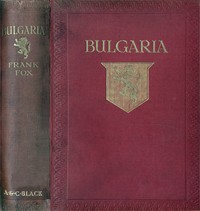
This digital edition of Bulgaria — Context and Discussion is described by source-level measurements including 45,668 words, 3 hr 19 min estimated reading time, and 7 detected text sections.
The text analysis averages about 23.4 words per sentence, while the detected sections provide another way to judge how the source is divided.
Project Gutenberg metadata also associates the work with “Bulgaria -- Description and travel,” connecting these edition facts with the source record’s subject description.
Explore this collection
These alternatives are selected using recorded categories and estimated reading time.
About 200 minutes
Geography
45,888 recorded words. 1 minutes difference from this book's estimate.
View Gutenberg source #25174About 201 minutes
Geography
46,081 recorded words. 2 minutes difference from this book's estimate.
View Gutenberg source #22511About 197 minutes
Geography
45,192 recorded words. 2 minutes difference from this book's estimate.
View Gutenberg source #33620Search stored excerpts and compare books → Choose by your preferences →
Choices use stored catalog measurements. Estimates vary with reading speed. A shared category is a catalog label, not a claim that two books have the same argument or literary quality.
Search reads excerpt text stored with this catalog and links to its associated Gutenberg record. The connection is stored in the site database; this tool does not recheck that every excerpt is word-for-word identical to that external record. Excerpt search does not cover every chapter and does not verify historical publication dates.
Catalog snapshot checked: 2026-09-26. Coverage: 97 public books, 97 available source excerpts.
Calculated from edition completeness, EPUB availability, text structure and catalogue metadata. Not a user rating.
Total of 100 points, scaled to a 2.5-5.0 range. Editions with an empty description or a missing EPUB file are not scored.
Public-domain source text
The source text is kept in the dedicated reader, separate from this catalogue record and its commentary.
Frank Fox opens his account of Bulgaria with a confession of his own preconceptions: he expected a 'cut-throat country where massacre was the national sport.' This blunt admission sets the tone for a work that repeatedly questions received ideas. Drawing on his assignment as a war correspondent for the Morning Post during the 1912 Balkan War, Fox weaves together frontline reportage, historical background, and sketches of peasant life. The book’s structure—part travelogue, part political analysis—reflects its dual purpose: to inform the British reader about a little-known nation and to critique the machinery of war reporting itself.
Fox devotes an entire chapter to the trials of a war correspondent, and his account is remarkably candid about the limits imposed on journalists. He describes the censorship at Mustapha Pasha, where letters were read aloud to English censors and forbidden to mention 'guns, oxen, soldiers, roads, mud, dirt, or other tabooed subjects.' The absurdity peaks with a correspondent’s mock love letter to 'Ducksie Darling,' submitted as a prank. Fox’s tone is wry but pointed: he argues that modern warfare makes it impossible for embedded reporters to see real action, and that 'if you do not invent you will send nothing of value.' This self-reflexive critique distinguishes the book from standard travelogues.
Beyond the war, Fox lingers on the details of Bulgarian peasant culture. He notes the Ratchenitza, the national dance, and describes the costumes of the Shôp people with an ethnographer’s eye. The illustrations by Jan V. Mrkvicka and Noel Pocock—32 full-page colour plates—reinforce this visual emphasis. Fox’s prose is most vivid when he steps away from politics: a blind beggar woman, a wedding in the Rhodopes, or the 'all-pervading mud' of Mustapha Pasha. These moments ground the narrative in sensory experience, though Fox occasionally lapses into the 'picturesque ways' he claims to distrust.
The book’s later chapters shift from reportage to polemic. Fox traces Bulgaria’s history from the fall of the Roman Empire through the 'Tragedy of 1914,' arguing that the Great Powers have mishandled the Balkan question. He is critical of both Turkish rule and the European diplomacy that followed Bulgaria’s liberation. The final chapter, 'The Responsibility of Europe,' makes a case for a more just settlement. These sections rely on broad historical claims rather than the granular observation of the earlier chapters, and Fox’s tone becomes more editorial. Readers should weigh his arguments against the firsthand accounts that precede them.
Fox’s authorial voice is distinctive: self-deprecating, occasionally sardonic, and aware of its own limitations. He admits that his first impressions were shaped by Gladstone’s 'Bulgarian Atrocities' campaign and the subsequent reaction. He jokes about his own 'lapsing into the picturesque ways of the new school of correspondents.' This reflexivity gives the book an unusual honesty. Fox does not pretend to omniscience; he presents himself as a fallible observer caught between the demands of his editors, the censors, and the truth. The result is a travelogue that is as much about the act of reporting as about Bulgaria itself.
Fox’s Bulgaria rewards readers who approach it as a layered document: part war diary, part cultural survey, part political essay. The excerpts suggest that its greatest value lies in the tension between Fox’s stated desire for accuracy and the constraints he faced. Pay attention to the moments when he lets the details speak—the mud, the censored letters, the dance—rather than the broader historical arguments. The book is a product of its time, but its scepticism about official narratives remains pointed.
Fox’s Bulgaria, for all its grit and war-weariness, keeps returning to what ordinary people carry quietly. I find the same patient soul in that older Greek companion, Rambles and Studies in Greece — Background and Themes, where landscape and legend rest together without fuss. Both books whisper the same truth: place outlasts politics.
Create a short personal record of your experience with this book.









