About 266 minutes
Europe—whither bound? (Quo vadis Europa?) — Reading Companion
Geography
60,976 recorded words. 2 minutes difference from this book's estimate.
View Gutenberg source #21499
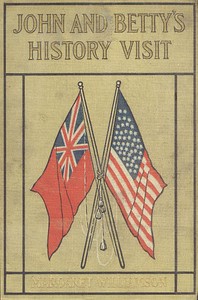
John and Betty's History Visit — A Closer Reading can be approached with a clearer sense of reading commitment from its source measurements: 61,487 words, 4 hr 28 min estimated reading time, and 9 detected text sections.
The text analysis averages about 18.1 words per sentence, while the detected sections provide another way to judge how the source is divided.
Project Gutenberg metadata also associates the work with “England -- Description and travel,” connecting these edition facts with the source record’s subject description.
Explore this collection
These alternatives are selected using recorded categories and estimated reading time.
About 266 minutes
Geography
60,976 recorded words. 2 minutes difference from this book's estimate.
View Gutenberg source #21499About 272 minutes
Geography
62,419 recorded words. 4 minutes difference from this book's estimate.
View Gutenberg source #19378About 264 minutes
Geography
60,512 recorded words. 4 minutes difference from this book's estimate.
View Gutenberg source #27861Search stored excerpts and compare books → Choose by your preferences →
Choices use stored catalog measurements. Estimates vary with reading speed. A shared category is a catalog label, not a claim that two books have the same argument or literary quality.
Search reads excerpt text stored with this catalog and links to its associated Gutenberg record. The connection is stored in the site database; this tool does not recheck that every excerpt is word-for-word identical to that external record. Excerpt search does not cover every chapter and does not verify historical publication dates.
Catalog snapshot checked: 2026-09-26. Coverage: 97 public books, 97 available source excerpts.
Calculated from edition completeness, EPUB availability, text structure and catalogue metadata. Not a user rating.
Total of 100 points, scaled to a 2.5-5.0 range. Editions with an empty description or a missing EPUB file are not scored.
Public-domain source text
The source text is kept in the dedicated reader, separate from this catalogue record and its commentary.
The catalog entry for John and Betty's History Visit lists only 'England -- Description and travel' as its subject, but the excerpts reveal a book far more concerned with literary legend than with geography. The narrative follows American siblings and their mother, Mrs. Pitt, as they tour English landmarks, but the text repeatedly prioritizes romanticized stories—such as Shakespeare's deer-poaching escapade—over factual description. The opening chapter sets this tone: the children watch from a train window, but the journey quickly becomes a series of set-piece anecdotes rather than a systematic survey of places.
The travelogue structure is a thin frame for what are essentially historical vignettes. At Charlecote Park, for example, the party discusses the 'Tumble-down Stile' and Shakespeare's supposed deer theft, with Mrs. Pitt declaring, 'So long as we are believing all we see to-day, I feel quite justified in telling you' the story. The geography of Warwickshire matters less than the legend. Similarly, at Anne Hathaway's cottage, the group invents a romantic narrative about Anne 'dream[ing] about Will' by the window, despite the guide's factual reticence. The book consistently treats sites as prompts for imaginative reconstruction rather than as geographical features.
Mrs. Pitt functions as both tour leader and arbiter of historical truth. She arranges bicycles, tips station-masters, and carries a 'divided-skirt' for impromptu rides. More importantly, she controls the stories: she decides which legends to endorse (Shakespeare's deer) and which to gently mock (Anne's bedroom). When John cites General Grant to settle a dispute, Mrs. Pitt does not correct him. The children—John, Betty, and Barbara—ask questions and express wonder, but the mother's voice dominates, shaping their understanding of each site. This dynamic makes the book as much about a family's interpretive authority as about England itself.
The book is 'Illustrated from Photographs,' and the captions often echo the text's blend of fact and fancy. The frontispiece shows the cathedral 'looming up before them,' a phrase that emphasizes subjective impression over architectural detail. Other captions quote the characters' exclamations ('Oh, what's this place?') rather than identifying the site. The photographs thus serve not as objective records but as visual counterparts to the narrative's emotional register. The catalog subject 'Description and travel' implies a factual account, but the images, like the text, prioritize the travelers' reactions over systematic documentation.
Readers approaching this book for geographical information will find it filtered through a fictional family's enthusiasms. The catalog subject is accurate only in the broadest sense: the book does describe travel, but it does so through anecdote, dialogue, and selective legend. To use it as a travel guide would be misleading; to read it as a period piece about early 20th-century American tourism in England is more fruitful. The value lies not in its geography but in its portrayal of how historical sites were consumed and narrated a century ago.
John and Betty’s chatter about kings and abbots reminded me of sitting on my grandmother’s porch, her old Baedeker open to a page we never visited. That same drifting feeling—places felt through stories rather than streets—came back with In Château Land — Edition Insights, where every tower seemed to hold a ghost of a conversation rather than a date. I preferred that haze to any map.
Save your reaction, strongest insight, and memorable passage.









