About 1,021 minutes
Across Coveted Lands; or, a Journey from Flushing (Holland) to Calcutta Overland — Story, Setting & Ideas
Geography
234,712 recorded words. 501 minutes difference from this book's estimate.
View Gutenberg source #22117
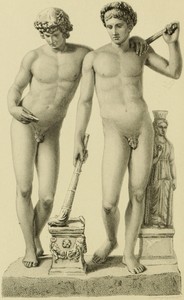
For Sketches and Studies in Italy and Greece, Complete Series I, II, and III — Key Ideas to Explore, the stored edition analysis reports 349,936 words, 25 hr 22 min estimated reading time, and 51 detected text sections.
The text analysis averages about 21.3 words per sentence, while the detected sections provide another way to judge how the source is divided.
Project Gutenberg metadata also associates the work with “Italy -- Description and travel,” connecting these edition facts with the source record’s subject description.
Explore this collection
These alternatives are selected using recorded categories and estimated reading time.
About 1,021 minutes
Geography
234,712 recorded words. 501 minutes difference from this book's estimate.
View Gutenberg source #22117About 635 minutes
Geography
145,846 recorded words. 887 minutes difference from this book's estimate.
View Gutenberg source #28057About 632 minutes
Geography
145,236 recorded words. 890 minutes difference from this book's estimate.
View Gutenberg source #16180Search stored excerpts and compare books → Choose by your preferences →
Choices use stored catalog measurements. Estimates vary with reading speed. A shared category is a catalog label, not a claim that two books have the same argument or literary quality.
Search reads excerpt text stored with this catalog and links to its associated Gutenberg record. The connection is stored in the site database; this tool does not recheck that every excerpt is word-for-word identical to that external record. Excerpt search does not cover every chapter and does not verify historical publication dates.
Catalog snapshot checked: 2026-09-26. Coverage: 97 public books, 97 available source excerpts.
Calculated from edition completeness, EPUB availability, text structure and catalogue metadata. Not a user rating.
Total of 100 points, scaled to a 2.5-5.0 range. Editions with an empty description or a missing EPUB file are not scored.
Public-domain source text
The source text is kept in the dedicated reader, separate from this catalogue record and its commentary.
The collection opens not with a city but with a journey: the traveller deliberately courts the heat of French plains and the monotony of poplar trees to earn the evening coolness and the gradual approach to the Alps. This sensory patience—the feel of Swiss thistle, the sound of the Rhine beneath balconies—sets a pattern for the entire work. Symonds repeatedly frames arrival as a physical and emotional event, whether at the outskirts of Basle, the summit of Monte Generoso, or the shore of Syracuse. The essays, originally published in three separate volumes, have been rearranged by editor Horatio F. Brown into a topographical sequence that moves from the Alps through Lombardy, the Veneto, Tuscany, Umbria, and the Mezzogiorno, ending in Greece. This reordering subtly alters the reading experience, turning a miscellany into a kind of itinerary.
Symonds rarely stays still. Even within a single essay, he shifts between present-tense description, historical digression, and lyrical reflection. In “The Love of the Alps,” the approach to Switzerland is narrated in real time—the sun sets, Hesper appears, the air changes—before the essay pivots to a broader meditation on mountain feeling. The same technique recurs in “Autumn Wanderings,” where a walk through Parma’s streets leads to a discussion of Correggio and then to the battlefield of Fornovo. These transitions are not jarring; they mimic the associative logic of a traveller whose mind moves as freely as his feet. The reader is asked to follow not a single argument but a sequence of impressions, each anchored to a specific place and moment.
Certain images reappear across the three volumes, binding the collection together. The green Swiss thistle, noted at Mulhausen, returns in the Italian sections as a marker of altitude and freshness. Poplar trees line French plains and Lombard roads alike. Clear, running streams—the Rhine at Basle, the Adige at Verona, the Clitumnus near Foligno—serve as both physical landmarks and emblems of vitality. Symonds has a particular fondness for the moment when a river becomes audible before it is visible, a detail that recurs in “Winter Nights at Davos” and “Spring Wanderings.” These repeated motifs create a sensory continuity across essays that otherwise range from Alpine winter to Sicilian spring.
Symonds’s historical analysis in the Florence essay is one of the few sustained arguments in the collection. He defines Guelf as municipal liberty and burgher industry, Ghibelline as noble tyranny and feudal lordship, then traces how these factions outlived their original European context. The passage is notable for its clarity and its willingness to generalise: “the population of the towns included what remained in Italy of the old Roman people.” This framework reappears implicitly in other essays—the discussion of Sienese factions, the account of Colleoni’s mercenary career, the portrait of Urbino under Federico da Montefeltro. Symonds uses the Guelf-Ghibelline binary not as a rigid schema but as a tool to explain the social geography of Italian cities.
Horatio F. Brown’s 1898 preface explains that the essays have been reordered “for the convenience of travellers.” The original volumes mixed Alpine and Italian material; the new sequence begins with the Alps, moves south through Lombardy and the Veneto, crosses to Tuscany and Umbria, then reaches Sicily and Greece. This arrangement creates a plausible journey, but it also obscures the chronological and thematic variety of Symonds’s original publication. Readers encountering the collection for the first time should be aware that the essays were not written as a continuous travelogue. The topographical order is an editorial intervention, not an authorial plan. It works best for those who wish to read region by region; those interested in Symonds’s intellectual development may prefer the original sequence.
Symonds’s prose rewards the reader who moves slowly, attending to the specific texture of each place—the sound of a stream, the shape of a thistle, the angle of a mountain shadow. The topographical arrangement invites comparison between regions, but each essay stands on its own. For the fullest experience, consider reading the Alpine pieces first, then the Italian city studies, and finally the Greek sketches, allowing the geographical sweep to accumulate gradually.
Reading Symonds’s descriptions of sun-scorched Sicilian stones, I felt that same gentle ache of distance I once found in From Edinburgh to India & Burmah — Reading Companion. Both wanderers carry home in their pockets, measuring foreign light against remembered grey. His temples, her pagodas—each a quiet pause, a breath held between worlds.
Capture what you thought, learned, and would like to remember.









